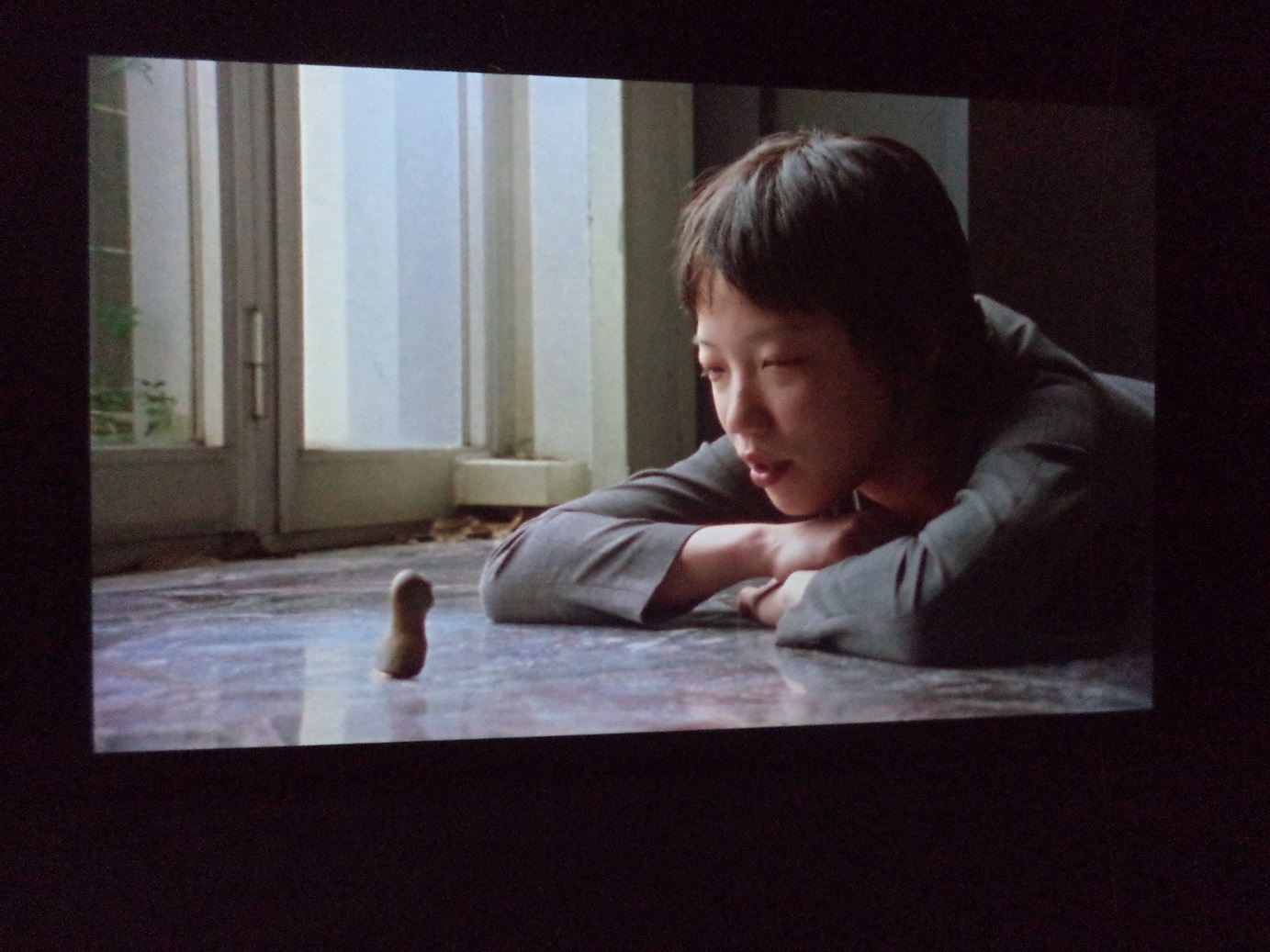
A Venezia, per la Biennale 2026, è visitabile il Padiglione Nazionale della Lituania, con la videoinstallazione dal titolo Animism sings anarchy, e realizzata dall’artista Egle Budvytyte, nota per le sue performance. A lei interessa esteticamente l’archeologia che sa emozionare. L’esibizione è stata organizzata presso la Fucina del Futuro, sotto la curatela di Louise O’Kelly. Va anche ricordato il supporto promozionale dal Programma di cultura lituana in Italia 2025-2026. Nell’arte performativa, sembra quasi che gli arti debbano lasciarsi in loco, divenuti reperti. La Fucina del Futuro è un’ex-fonderia, riqualificata per i progetti culturali o comunque sociali. Egle Budvytyte cita l’archeo-mitologa Marija Gimbutas, già interessata al periodo del Neolitico ed all’Età del bronzo, in cui vigeva un culto per le donne, che governavano garantendo l’uguaglianza. Le coreografie esisterebbero addirittura in natura, ad esempio tramite le grotte, laddove il raccoglimento si renderebbe sinuoso col calcare, mentre l’argilla donerebbe l’epidermide all’acqua. La ritualità, studiata in antropologia, dovrà fortificare. Si dà l’eccezionalità della preghiera contro la roccia, se più genericamente i sentimenti scalfiscono. Il filmato era stato girato coinvolgendo l’Italia: dal Museo delle Civiltà a Roma e dalla Grotta Scaloria in Puglia. Questi siti c’interessano per la cultura preistorica. La devozione manda in trance il facsimile. L’idolo rimane dentro di noi. Platonicamente, uscendo da una grotta ci mancherebbe l’abitudine a percepire la realtà illuminata.
Un museo guida i visitatori. Egle Budvytyte progetta coreografie paradossalmente “macchinose”, perché gli interpreti appendono locandine di meri “segnavia”, in merito alle divinità da riscoprire, complice la ruvidezza della roccia. C’è l’esistenzialismo religioso per il timore ed il tremore, con San Paolo. L’animismo si percepisce anarchico grazie al canto. Il principio del VERBA VOLANT, SCRIPTA MANENT si contrappone col pragmatismo all’eloquenza per il sofismo. Ma l’esternazione dei sentimenti privati è sublimabile con l’idealismo. Il cantante “lotta” contro il riverbero nei saloni. E’ la miniatura per il timore maggiore dello speleologo: il crollo (quando nemmeno il filo d’Arianna aiuterebbe). In sinestesia, il canto si percepisce come una fiamma per l’anima, ben oltre la voce della pelle. I rituali sono quasi sempre irrazionali, però anche genuini. Forse noi riprenderemmo l’eventuale estasi d’una grotta laddove essa rotolasse al globulo rosso per la montagna, animando la massima pesantezza dello stato inorganico. L’anarchismo apparterrà ai cunicoli interrotti (parafrasando l’estetica di Martin Heidegger). In Italia si conosce il motto del CANTA CHE TI PASSA. L’erranza fa parte della nostra vita, coi suoi imprevisti che noi speriamo “d’accordare”. L’arte rimane più “sovversiva”, rispetto ai canoni tradizionali del Potere. Egle Budvytyte cerca un tipo di performance che arricchisce il site-specific. Anche la pala per lo scavo archeologico si meriterebbe una sua “danza”. Valgono la passione per gli studi preparatori e la “devozione” verso la terra (onde evitare che una manovra azzardata delle “fredde” macchine rompa i reperti). Il museo scade quando il visitatore si limita a “buttare l’occhio”. Anche se l’archeologo trovasse dei reperti, per Egle Budvytyte bisognerebbe filmarlo nella sua assimilazione dell’etnografia, soprattutto se questa diventasse antesignana di qualcosa, sul “rituale laicizzato” del progresso, nella storia. Modernamente, noi menzioniamo i tentativi di lasciare ai posteri le capsule del tempo. Per la videoinstallazione, è stata adoperata la stampante 3D, ricostruendo le effigi dei reperti antichi. Quindi il filo d’Arianna avrebbe guadagnato in sicurezza, con un laser a fiammella addirittura solare (per riorientarsi sino alla domestichezza, oltre il tremore per la camera a mano). Egle Budvytyte è ricorsa all’improvvisazione, in merito alla sceneggiatura. I bozzetti per le coreografie hanno ricevuto un perfezionamento in loco, a seconda della sensibilità messa dagli interpreti. Alcuni reperti sono stati ispiratori da una loro sensualità, oltre la giocosità del feticismo. Per i popoli primitivi la grotta poteva avere una sacralità.
Da una poesia iniziale, s’immagina di fare uno stretching per lo scavo archeologico. Il palmo imparerebbe a diventare erogeno, se l’emblematica anfora ancheggiasse… In una grotta, c’è il “contorsionismo” dei cunicoli. Dalla meccanica dei fluidi, conosciamo l’Effetto Venturi, che regola i risucchi fra la pressione e la velocità. Qualcosa che riemerge dal seppellimento è comunque da palpare. Al museo non si corre tra le teche con le opere, quantunque si salti tra i periodi storici. C’è qualcuno che virtualmente “trapana” gli spogli corridoi di collegamento: la guida, snocciolando il solito copione. Forse si rischierà di spoilerare, ammortizzando il thrilling delle opere che spingono alla sindrome di Stendhal. Egle Budvytyte chiederebbe agli interpreti di danzare “trapanando”. Positivamente, il tremore avrà un costruttivismo per sensualizzarsi. Basta citare lo sfregamento sulla sabbia marina, con la sirena che al museo manterrebbe pur sempre un allarme. Normalmente noi conferiamo un’accezione negativa allo spasmo. A questo le coreografie scelte da Egle Budvytyte aggiungerebbero una raggiera, tramite gli arti, spesso alla miniatura delle mani, mentre i reperti cui mancano dei pezzi abbisognano d’un rimodellamento (perfino telepatico, da un effetto del montaggio). Alla sintesi potrebbe uscire la spirale; ricordiamoci i fossili comuni delle ammoniti. Occorre che si scavi sul proprio timore, se si vuole trovare l’estasi (ammortizzando l’irrigidimento).
A DEVOTION WHICH SENDS THE FACSIMILE INTO A TRANCE
In Venice, for the Biennale 2026, we can visit the National Pavilion of Lithuania, with the videoinstallation called Animism sings anarchy, and realized by the artist Egle Budvytyte, known for her performances. She is aesthetically interested in the archaeology which is able to excite. The exhibition was organized at the Fucina del Futuro, under the curatorship of Louise O’Kelly. We also have to remember the promotional support of the Italy-Lithuania Cultural Programme 2025-2026. In the performance art, almost it seems that the limbs have to leave themselves on site, becoming finds. The Fucina del Futuro is an ex-foundry, requalified for the cultural or however social projects. Egle Budvytyte mentions the archaeo-mythologist Marija Gimbutas, already interested in the age of Neolithic and in Bronze Age, where a worship of the women, who governed guaranteeing the equality, was effective. The choreographies would exist even in nature, for example through the caves, where the thoughtfulness would make itself sinuous with the limestone, while the clay would donate the epidermis to the water. The ritual, studied in the anthropology, will have to fortify. It happens the exceptionality of the prayer against the rock, if more generically the feelings scratch. The film was realized involving the Italy: from the Museum of Civilizations in Rome and from the Scaloria Cave in Apulia. These sites are interesting for us for the prehistoric culture. The devotion sends the facsimile into a trance. The idol remains inside us. Platonically, when we get out from a cave we would not be used to perceiving the illuminated reality.
A museum guides the visitors. Egle Budvytyte plans choreographies paradoxically “intricate”, because the performers hang posters of mere “trail signs”, about the divinities that we have to rediscover, with the complicity of the roughness of a rock. There is the religious existentialism for the fear and trembling, with Saint Paul. The animism is perceived as anarchist through the singing. The basics about VERBA VOLANT, SCRIPTA MANENT stand in contrast, with a pragmatism, to the eloquence for a sophism. But the exteriorization of the private feelings can be sublimated with the idealism. A singer “fights against” the reverberation in a hall. This is a miniature for the more important fear that a speleologist has: the collapse (when even the Ariadne’s thread would help). In a synaesthesia, the singing is perceived as a flame for the soul, really beyond a voice of the skin. The rituals are almost always irrational, but also genuine. Maybe we would film the potential ecstasy of a cave where it rolled over at a red blood cell for the mountain, animating the biggest heaviness of the inorganic state. The anarchism will belong to the interrupted tunnels (paraphrasing the aesthetics of Martin Heidegger). In Italy we know the motto about the SING AND YOU FEEL BETTER. A wandering condition belongs to our life, with its unexpected events that we hope “to tune”. The art remains more “subversive”, compared to the traditional standards of the Power. Egle Budvytyte looks for a type of performance which enriches the site-specific. Also a shovel for an archaeological excavation would deserve an own “dance”. The passion for the preparatory studies, and a “devotion” for the ground (in order to prevent a risky maneuver of the “cold” machineries, breaking the finds), are valid. The museum is depreciated when the visitor limits himself to “cast his eye”. Even though the archaeologist found some finds, according to Egle Budvytyte we should film him in his assimilation of the ethnography, principally if this one became forerunner of something, on a “secularized ritual” of the progress, in the history. In a modern way, we mention the attempts to leave to posterity the time capsules. For the videoinstallation, a 3D printer was used, rebuilding the effigies of the ancient relics. So the Ariadne’s thread would have earned a security, with a laser as a flame even solar (to a reorientation until the familiarity, beyond the tremble for a handheld videocamera). Egle Budvytyte resorted to the improvisation, about the screenplay. The sketches for the choreographies received an improvement on site, depending on the sensibility put by the performers. Some finds were inspirational from their sensuality, beyond the playfulness of the fetishism. For the primordial populations, the cave could have a sacredness.
From a starting poem, we imagine doing stretching for the archaeological excavation. The palm would learn to become erogenous, if the emblematic amphora wiggled its hips… In a cave, there is the “contortionism” of the tunnels. From the fluid mechanics, we know the Venturi effect, which regulates the suctions between the pressure and the velocity. Something that reemerges from a burial is however something that we have to palpate. In a museum we don’t run between the display cases with the works, although we jump between the historical periods. There is somebody who virtually “drills” the bare hallways for the connection: the guide, who rattles off the usual script. Perhaps we will risk to spoiler, amortizing the thrill of the works which lead to the Stendhal syndrome. Egle Budvytyte would ask the performers to dance “drilling”. Positively, the tremble will have a constructivism for its sensualization. It is enough to mention a rubbing on the sand of the sea, with the mermaid which at the museum would however preserve an alarm. Normally we confer a negative meaning on a spasm. There the choreographies chosen by Egle Budvytyte would add a radial pattern, through the limbs, often in the miniature of the hands, while the finds, whose pieces are lacking, need a remodelling (even telepathic, from an effect of the editing). At the synthesis a spiral could come out; we remember the common fossils of the ammonites. We need to dig on our fear, if we want to find the ecstasy (amortizing a stiffening).